Soapstone Flake Floor System with Full Moisture Protection
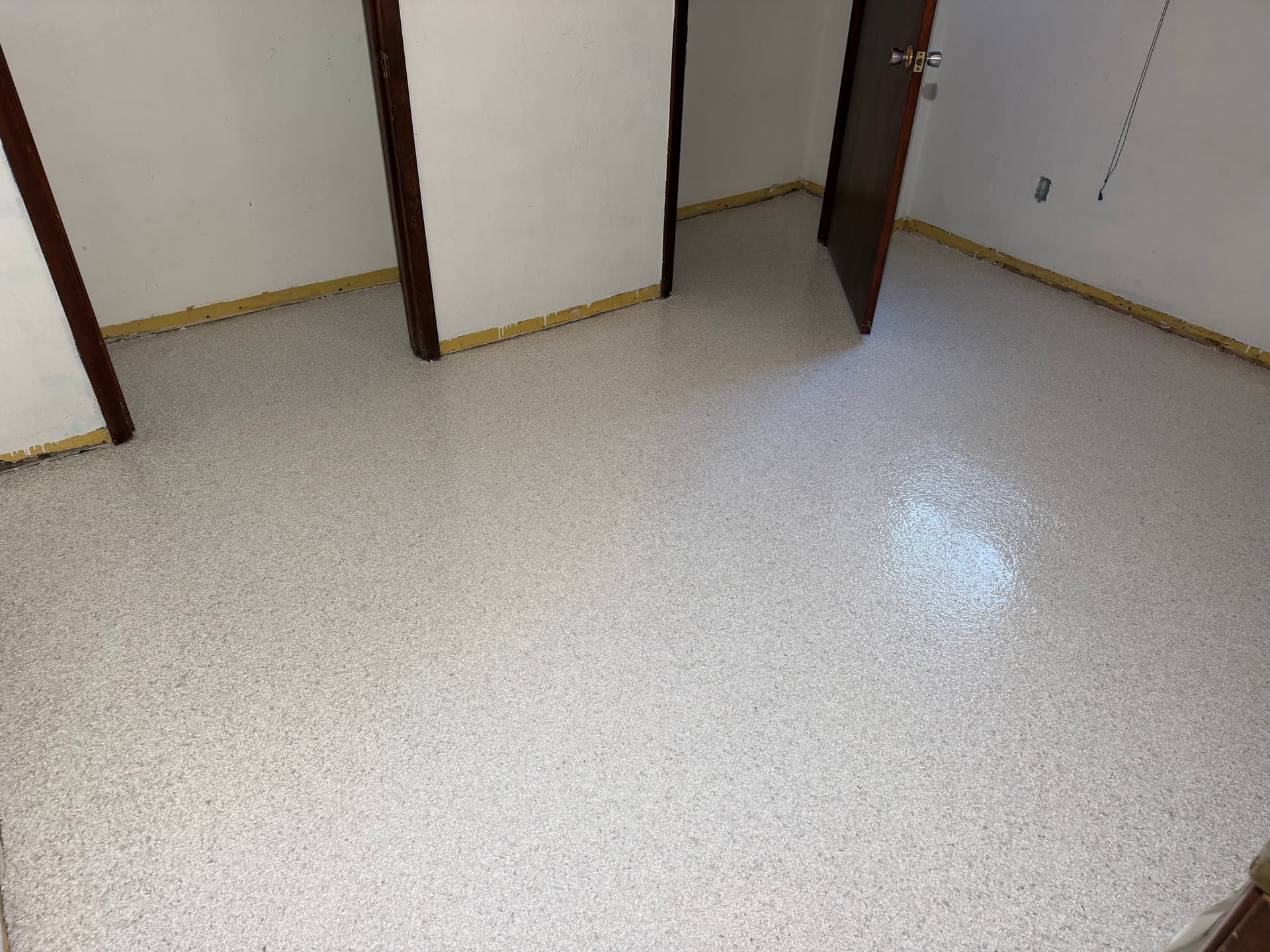
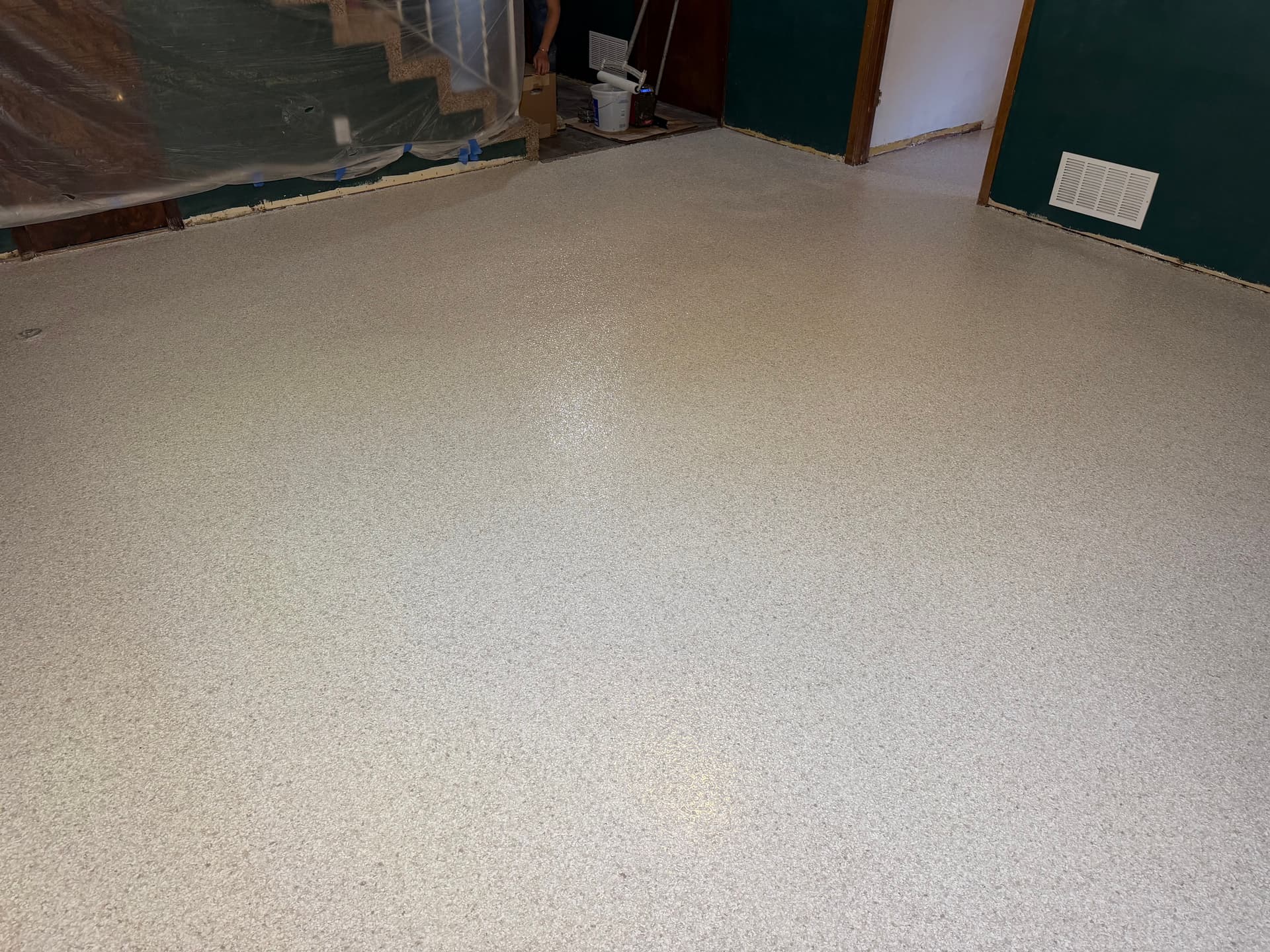
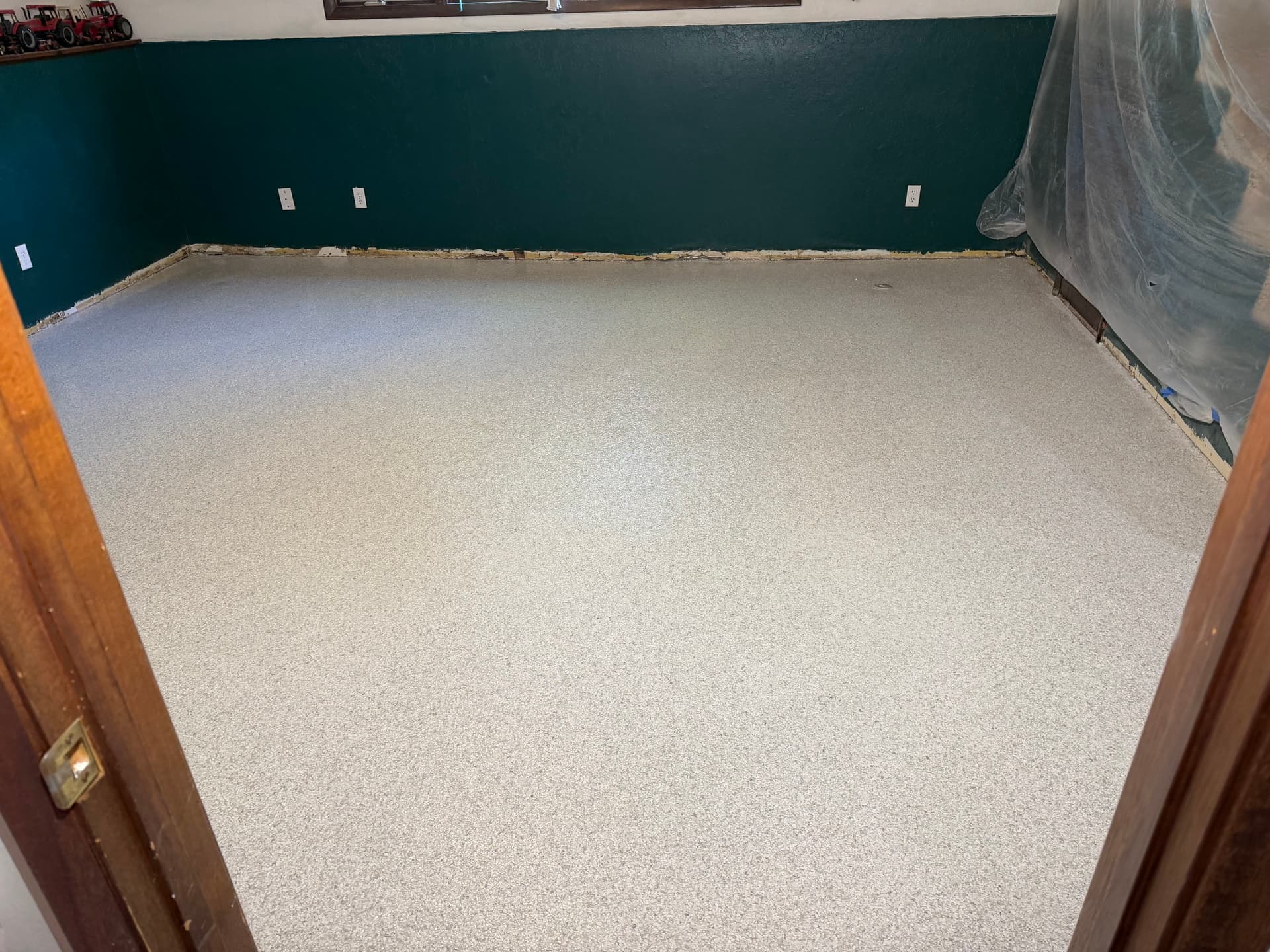
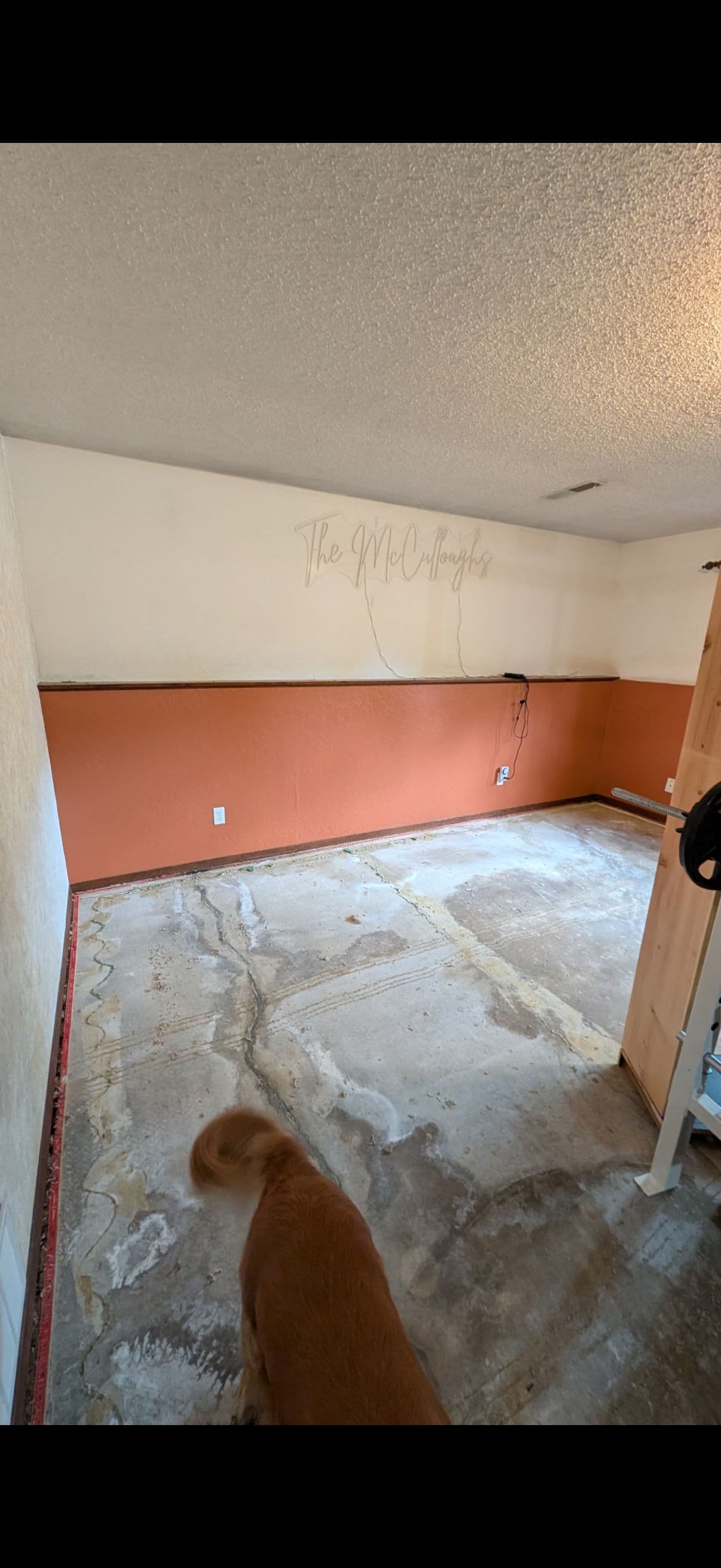
Here's what we were working with - bare concrete with visible seams, staining, and all the usual signs of a slab that had seen better days. Not the worst we've seen, but definitely not something you'd want left exposed under whatever flooring comes next.
We went with a full flake floor system in Soapstone. That means we didn't just roll on a coating and call it a day. We started with a moisture vapor barrier - critical on any interior slab where moisture pushing up from below can cause a coating to fail down the road. From there, it was an epoxy base coat, a full broadcast of vinyl flake, and a polyaspartic topcoat to lock everything in.
The polyaspartic topcoat is worth talking about. It's harder and more UV-stable than a standard epoxy clear, and it cures fast. More importantly, it creates a surface that's genuinely easy to clean - spills wipe up, dust doesn't hide in it, and it holds its sheen without a lot of maintenance.
The Soapstone color is a versatile neutral - light enough to brighten a space, with enough variation in the flake blend to hide everyday wear and dirt between cleanings. It works well in basement rec rooms, utility spaces, workshops, and anywhere you want a floor that looks sharp without demanding a lot of attention.
That's really the point of a system like this. It's not just about looks. It's about putting down something that holds up to real use, handles whatever moisture the slab throws at it, and doesn't require constant upkeep to stay looking good.