Carbon Flake Epoxy Floor System Installed at a Lakeside Cabin
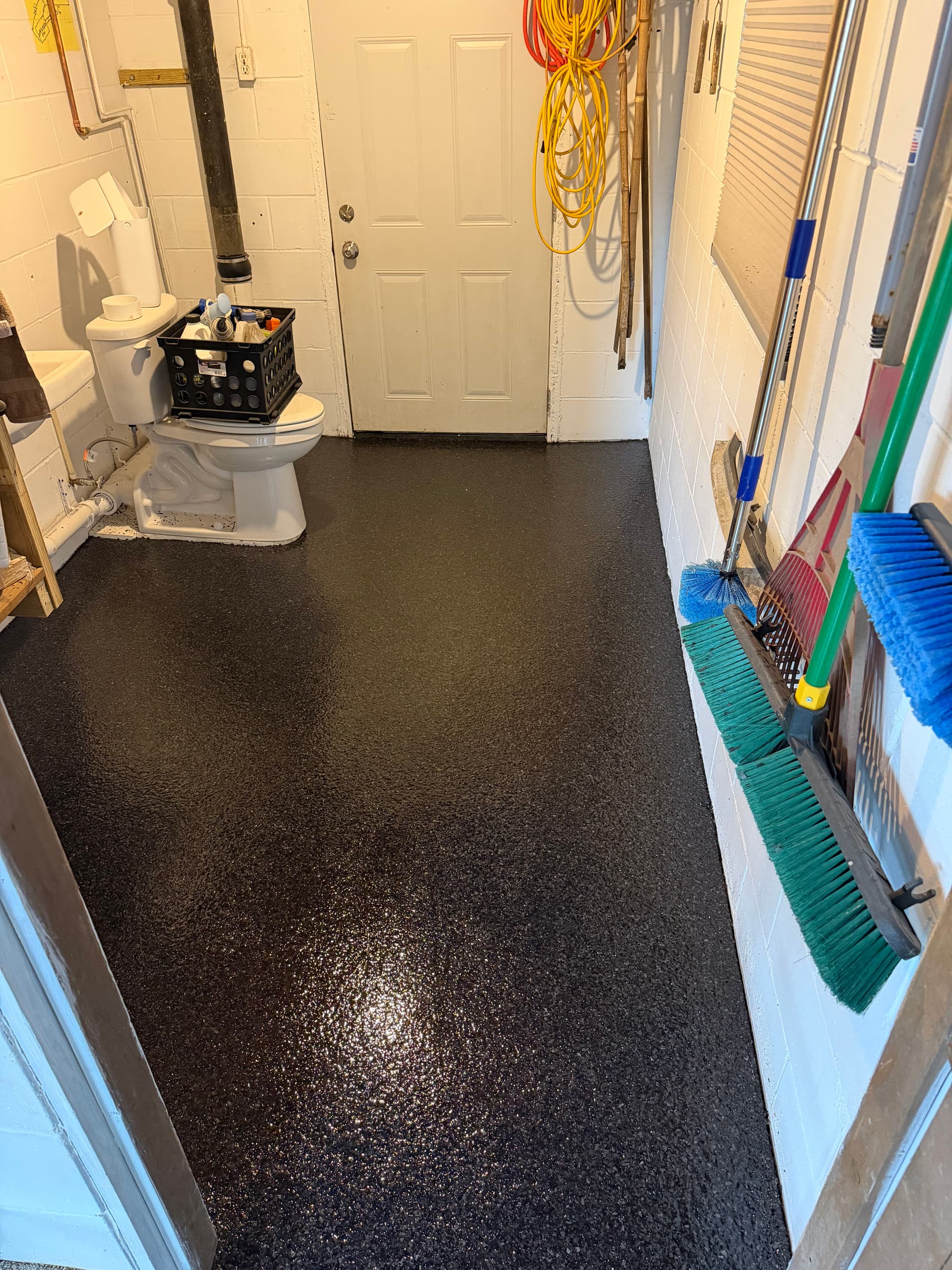
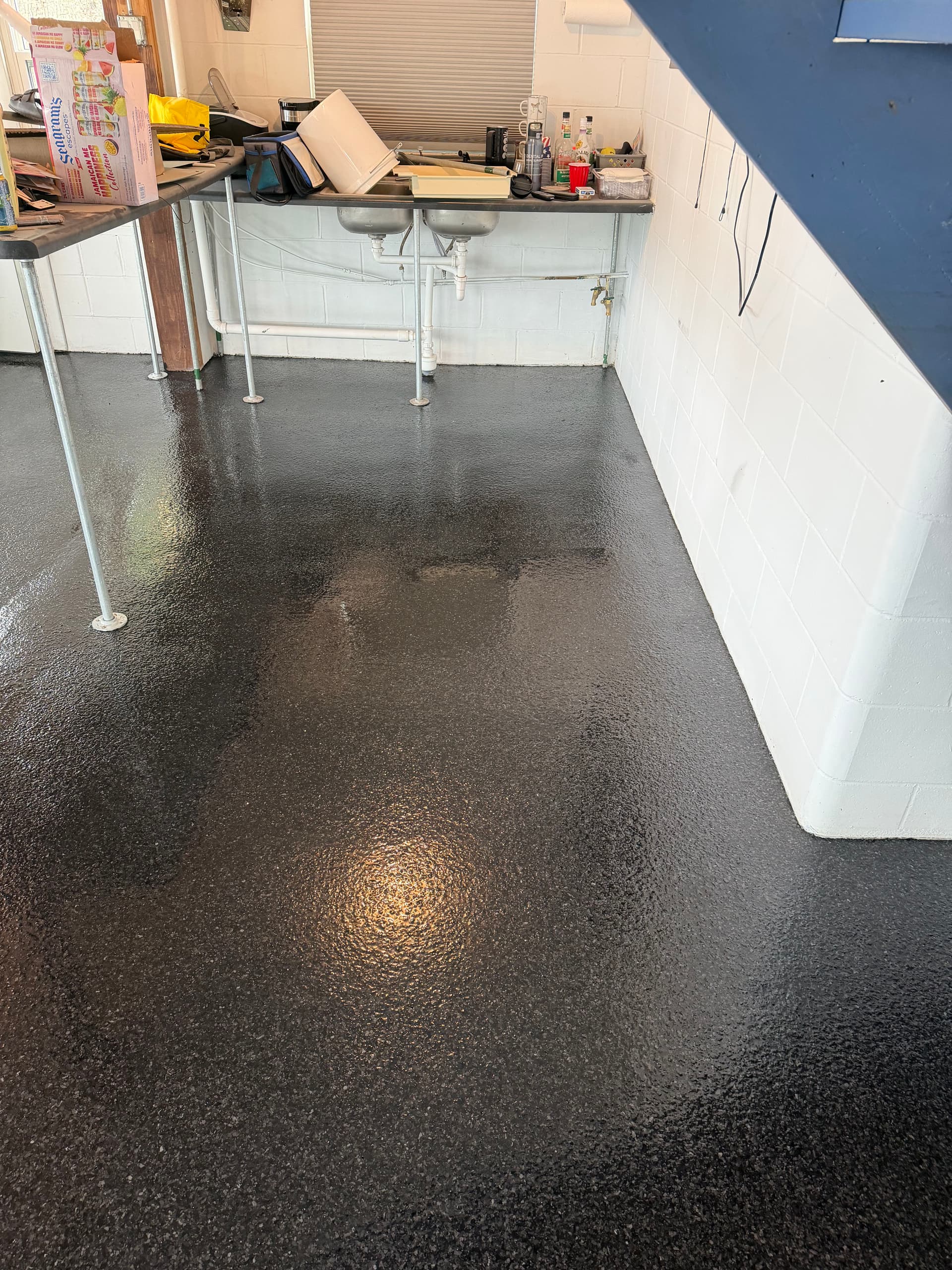
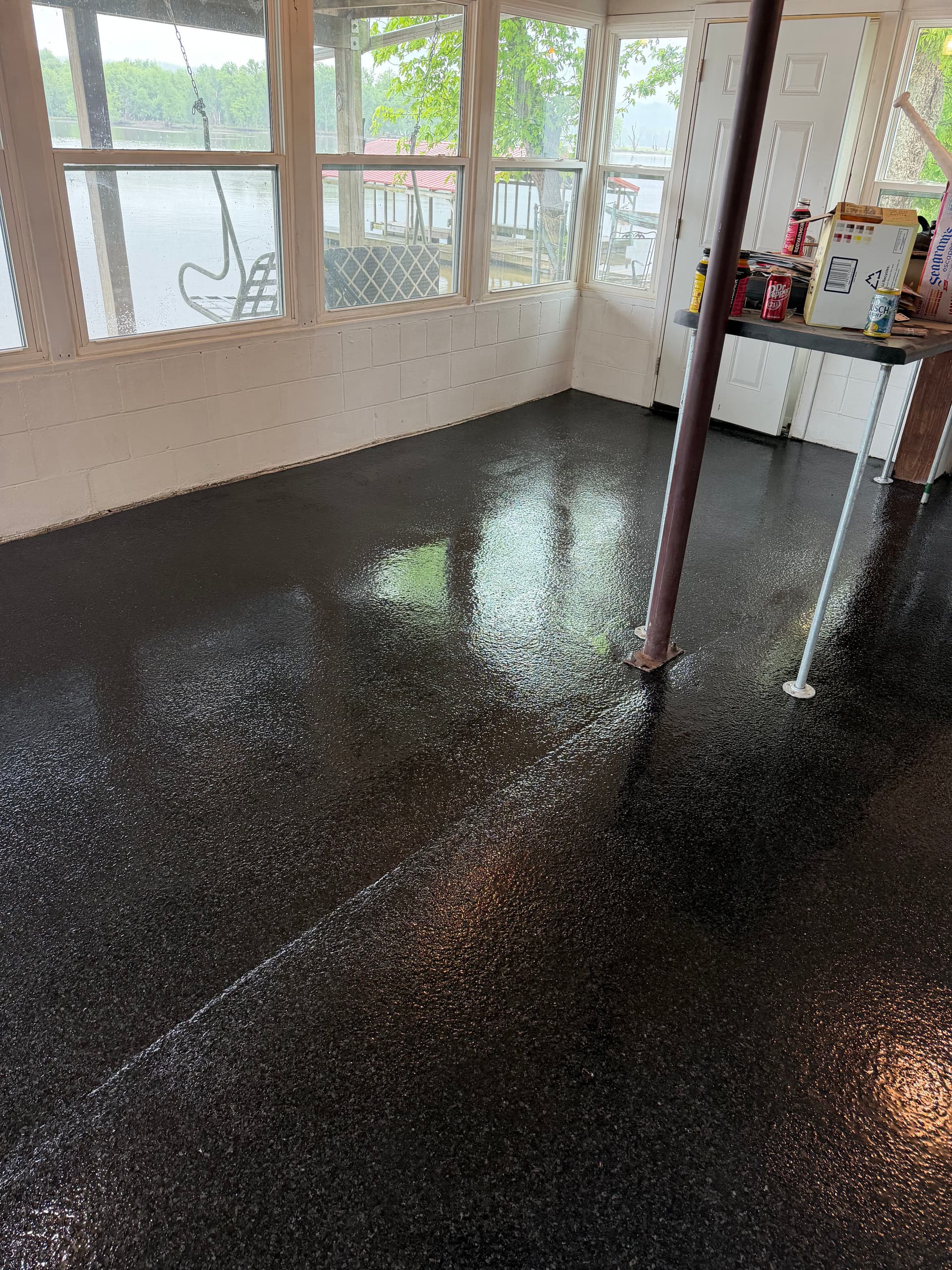
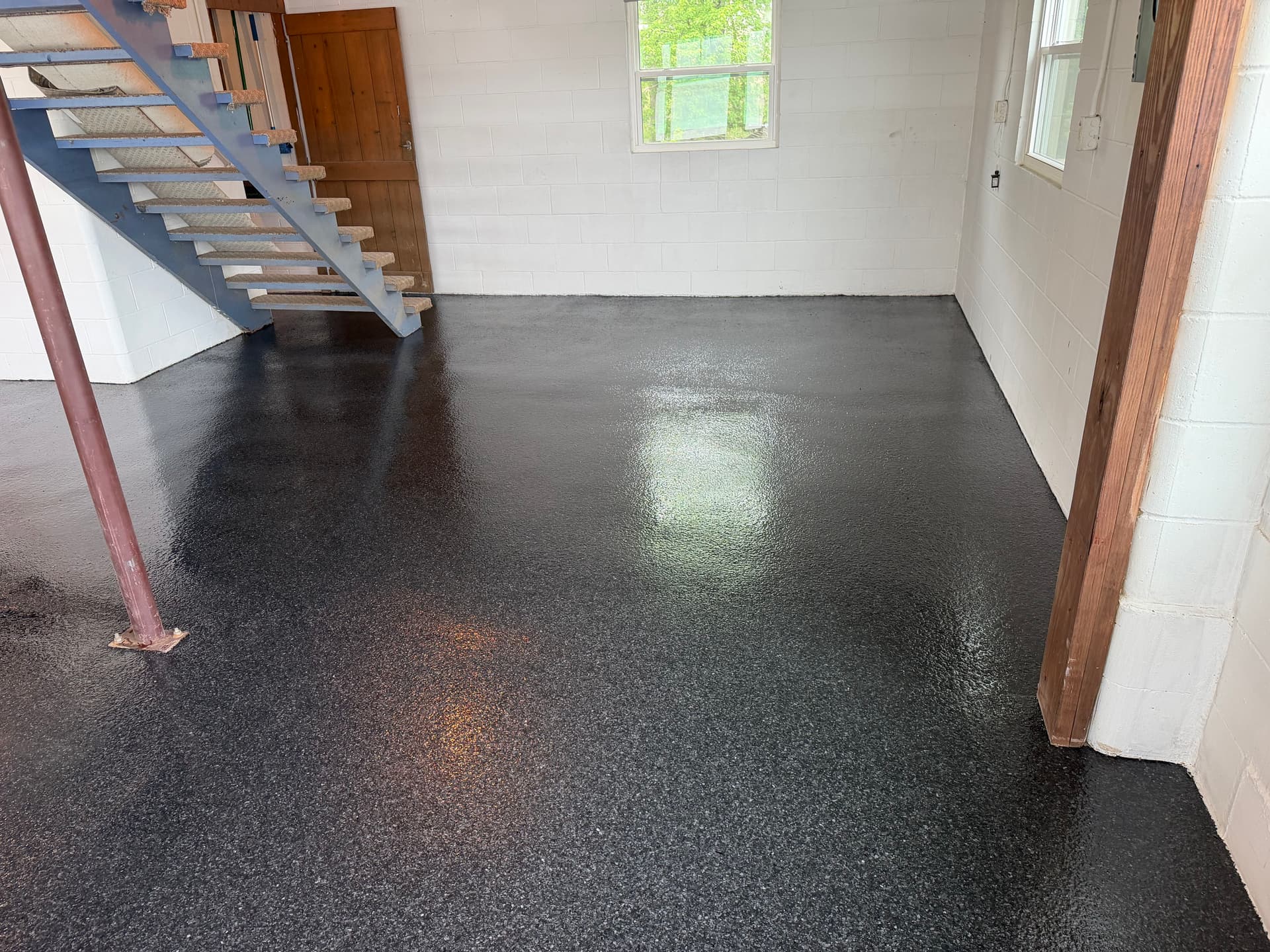
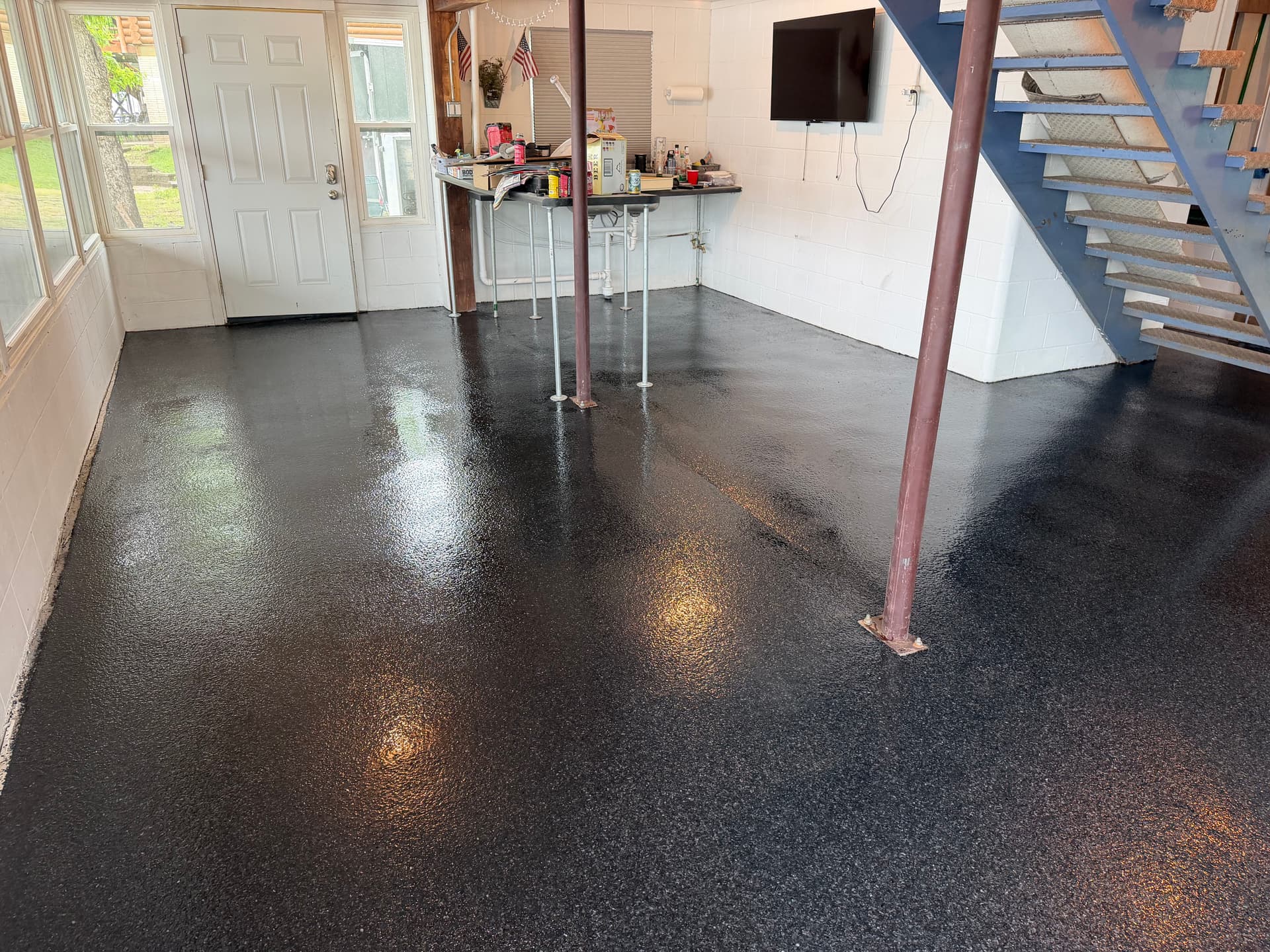
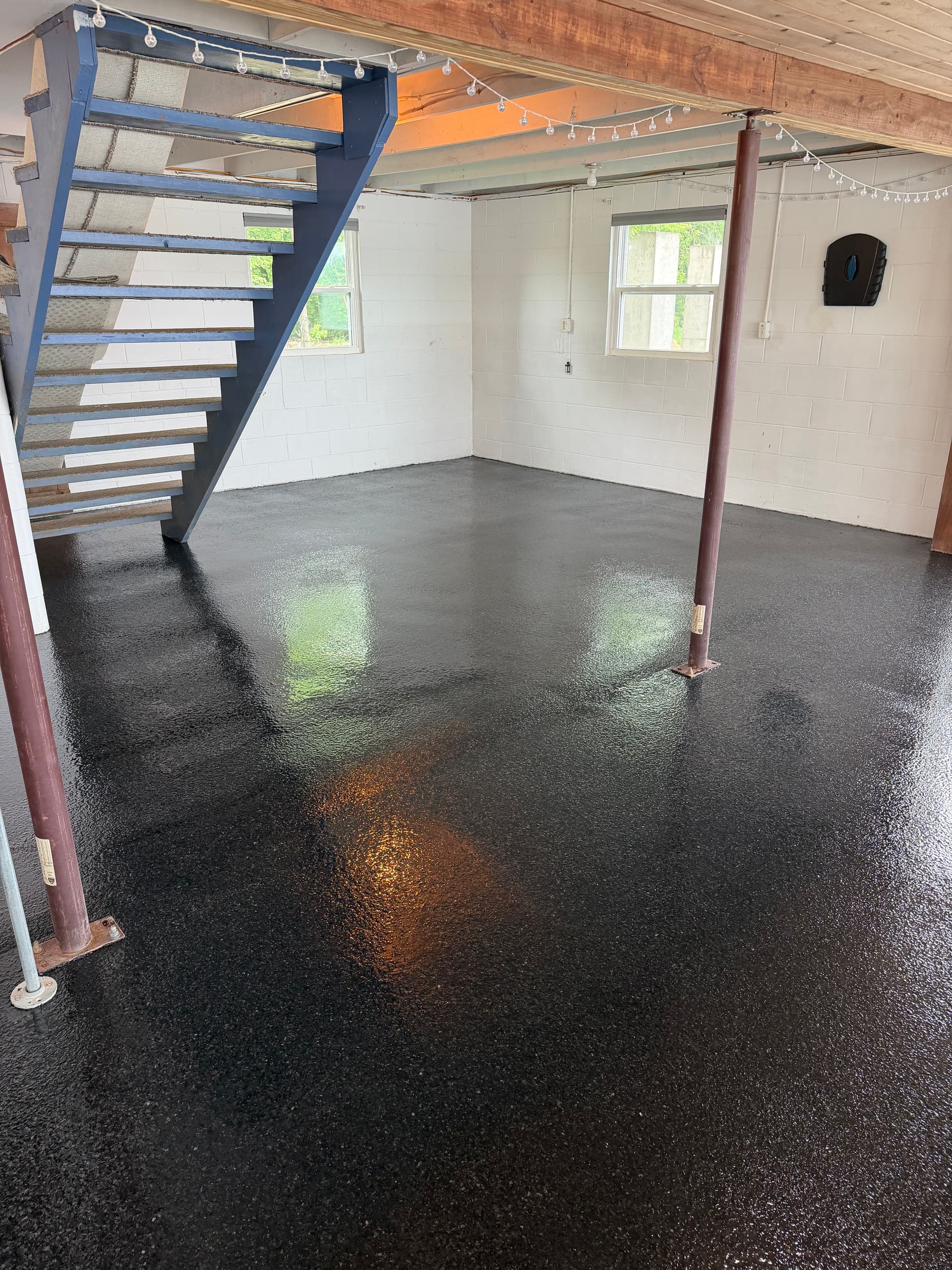
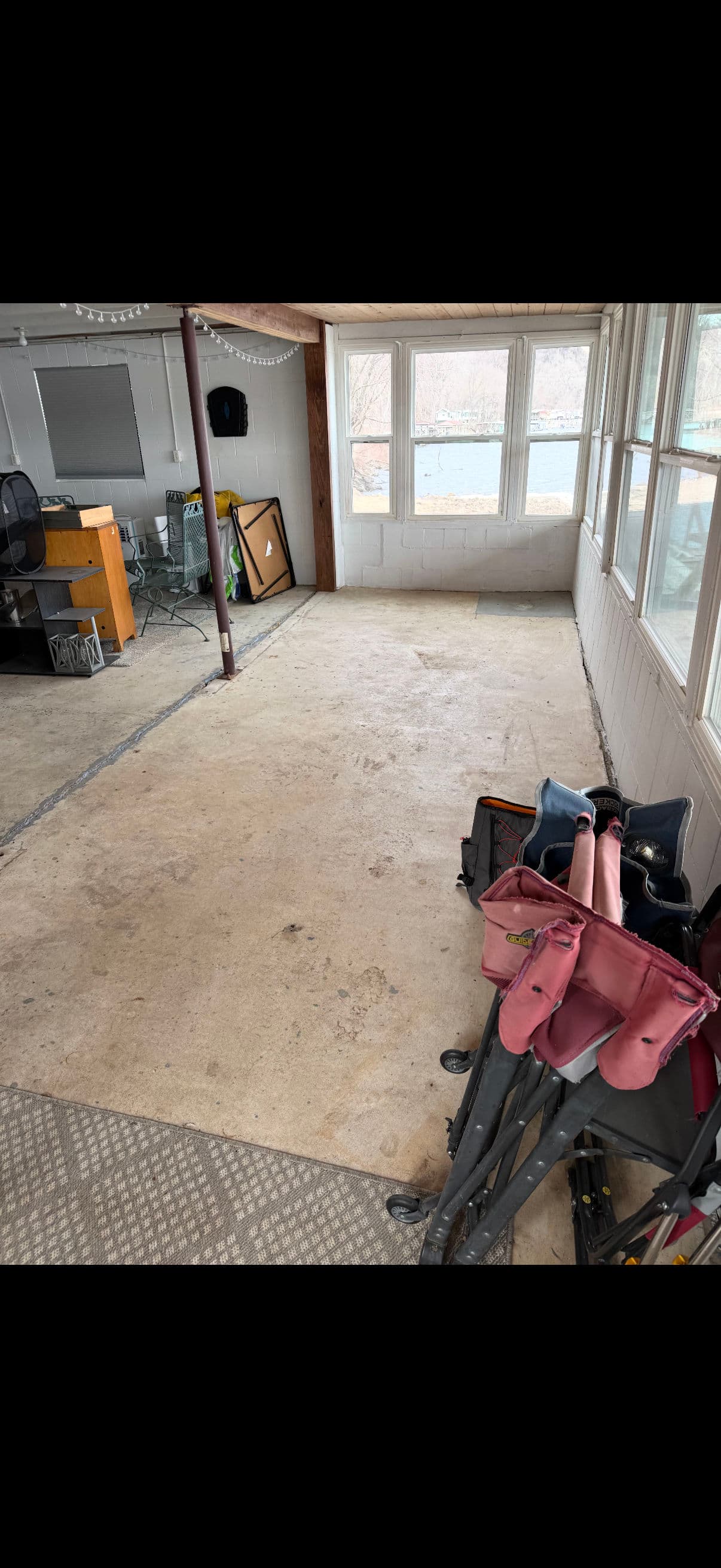
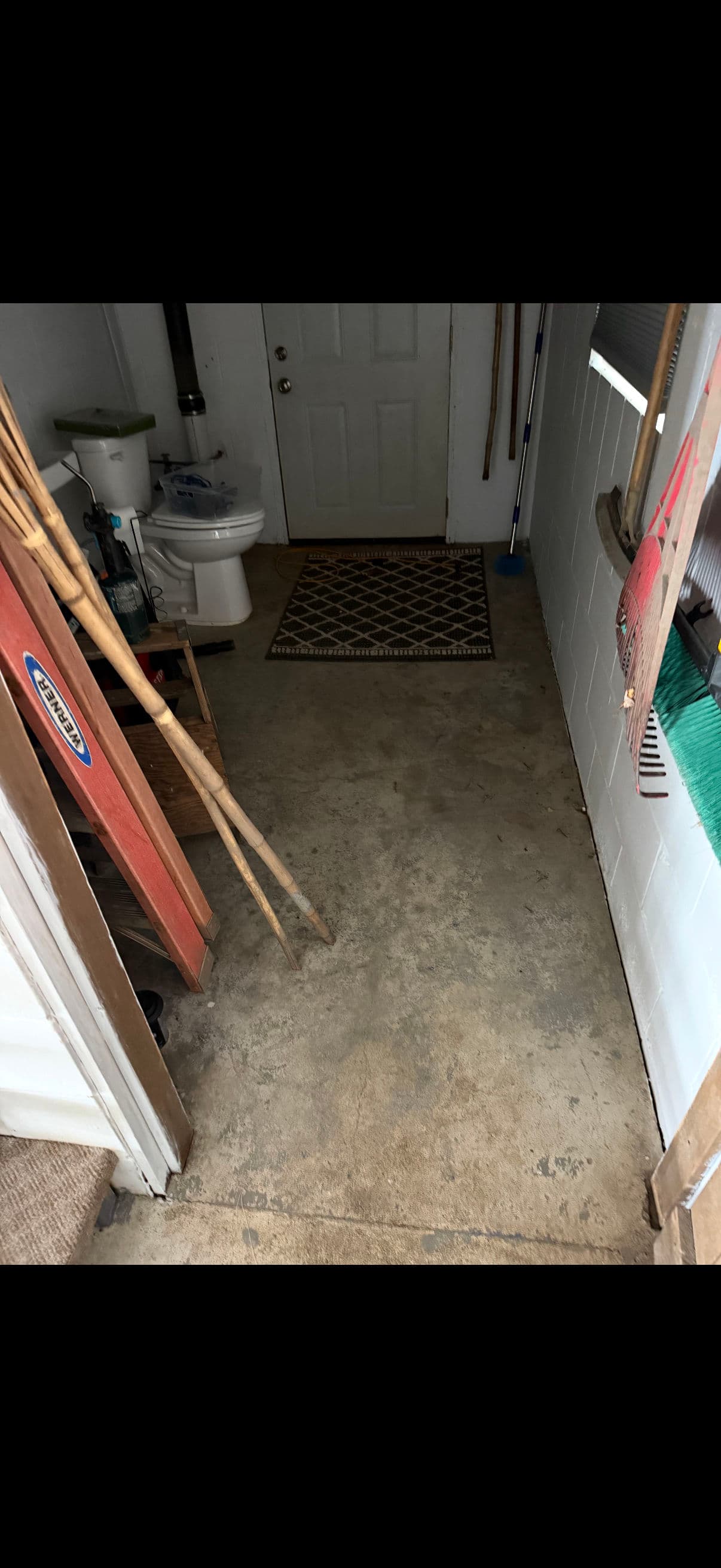
Cabin floors take a beating. Between foot traffic, moisture, and years of neglect, bare concrete in a cabin setting tends to look rough fast - stained, dull, and just worn out. That's exactly what we were working with here. The before shots tell the story pretty clearly. Dirty, tired concrete covering the main living area, a utility room, and the areas around the staircase. Not exactly the vibe you want when you're trying to enjoy a place on the water.
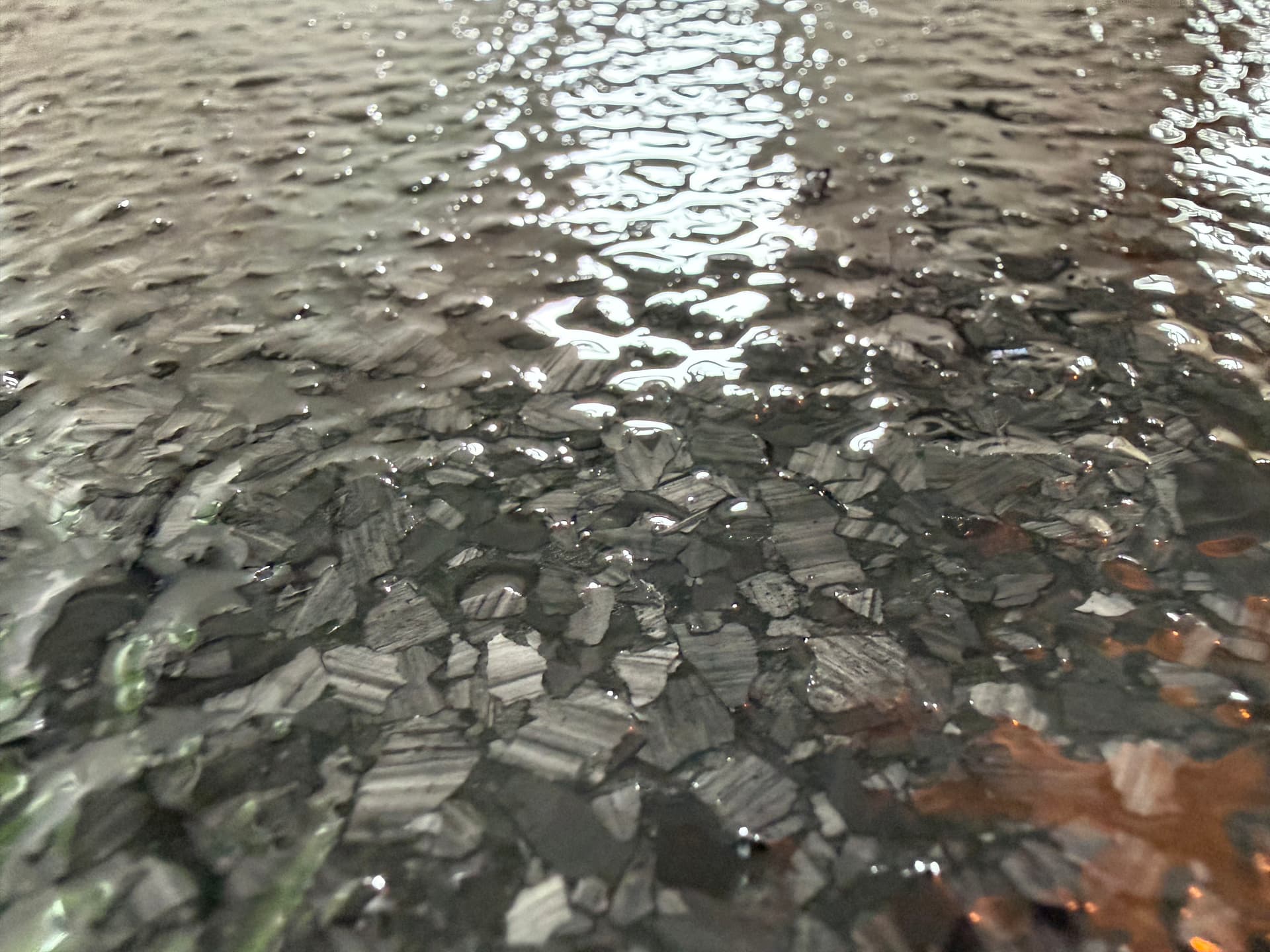
We went with a carbon flake floor system from top to bottom. The process starts with a 100% solids epoxy base coat - no fillers, no shortcuts. That base bonds directly to the concrete and gives the flake chips something solid to lock into. From there, we broadcast the carbon vinyl flake into the wet epoxy, letting it fully saturate the surface before we scrape it back and seal everything down with a polyaspartic topcoat.
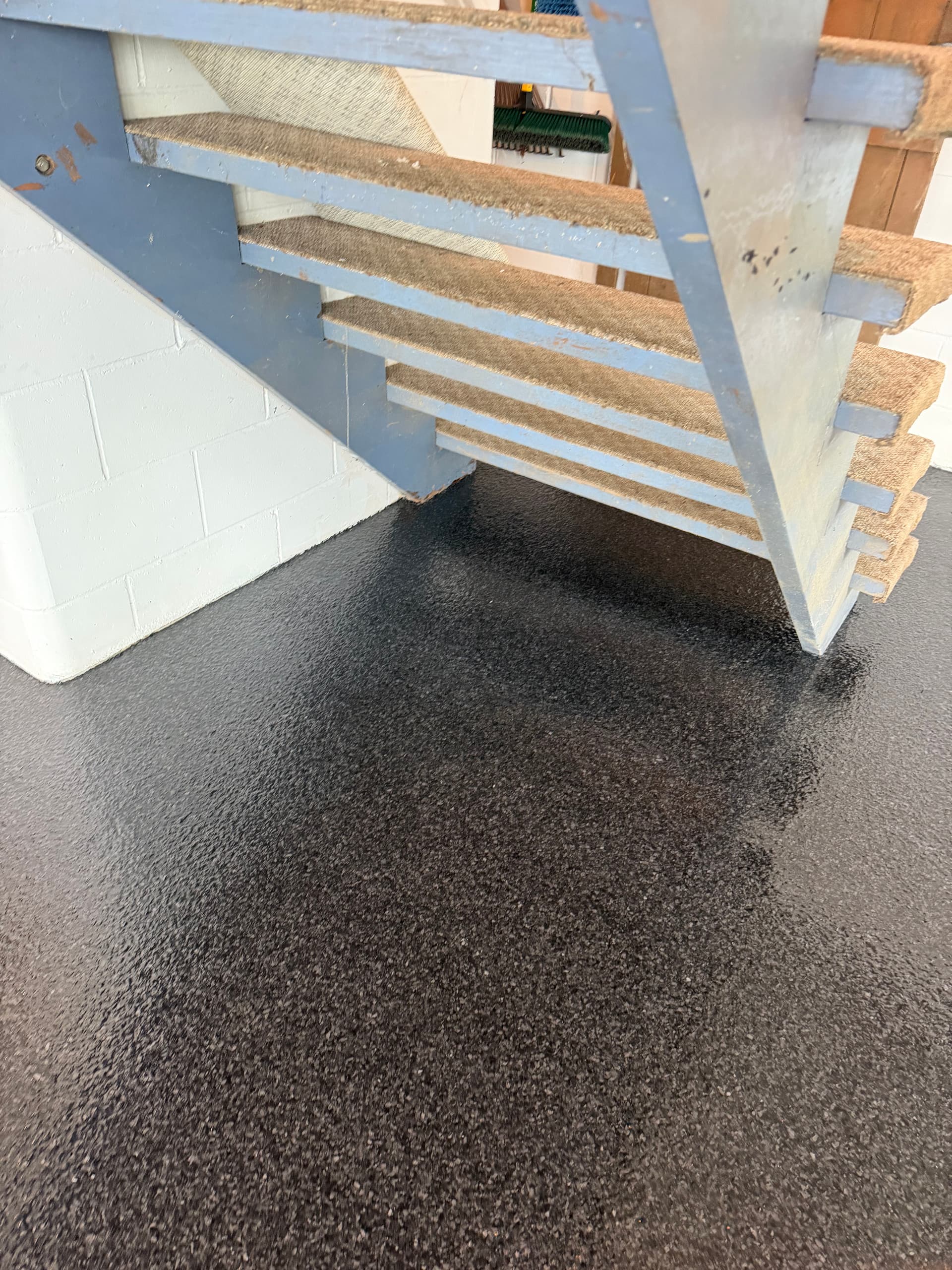
The polyaspartic topcoat is what really sets this system apart from a standard epoxy job. It's UV stable, so it won't yellow or fade over time. It's also harder and more chemical-resistant than a standard epoxy topcoat. For a cabin floor that sees everything from wet shoes to spilled drinks, that kind of toughness matters. And the close-up shot of the flake surface shows exactly how the finish locks in - dense, tight, with a glossy sheen that reflects light across the whole floor.
What we ended up with is a floor that covers every square foot of this cabin's lower level uniformly - the main room, the area around the stairs, the utility space near the bathroom. It's all one cohesive system. Clean, sharp, and built to handle real use without showing every scuff and stain like bare concrete does.
The carbon color choice was a smart call here too. It's bold enough to look intentional but neutral enough to work with basically any interior. Whether this cabin stays a personal getaway or gets used for hosting, the floor is going to hold up and still look good doing it. That's the whole point of a flake floor system done right.