Basement Floor Gets a 1/4 Inch Coyote Flake Epoxy System
Basement floors get overlooked a lot. People finish the walls, add lighting, maybe frame out some rooms - and then they just leave the concrete bare. The problem with that is bare concrete in a basement is always one moisture issue away from a real headache. That's what we were thinking about going into this one.
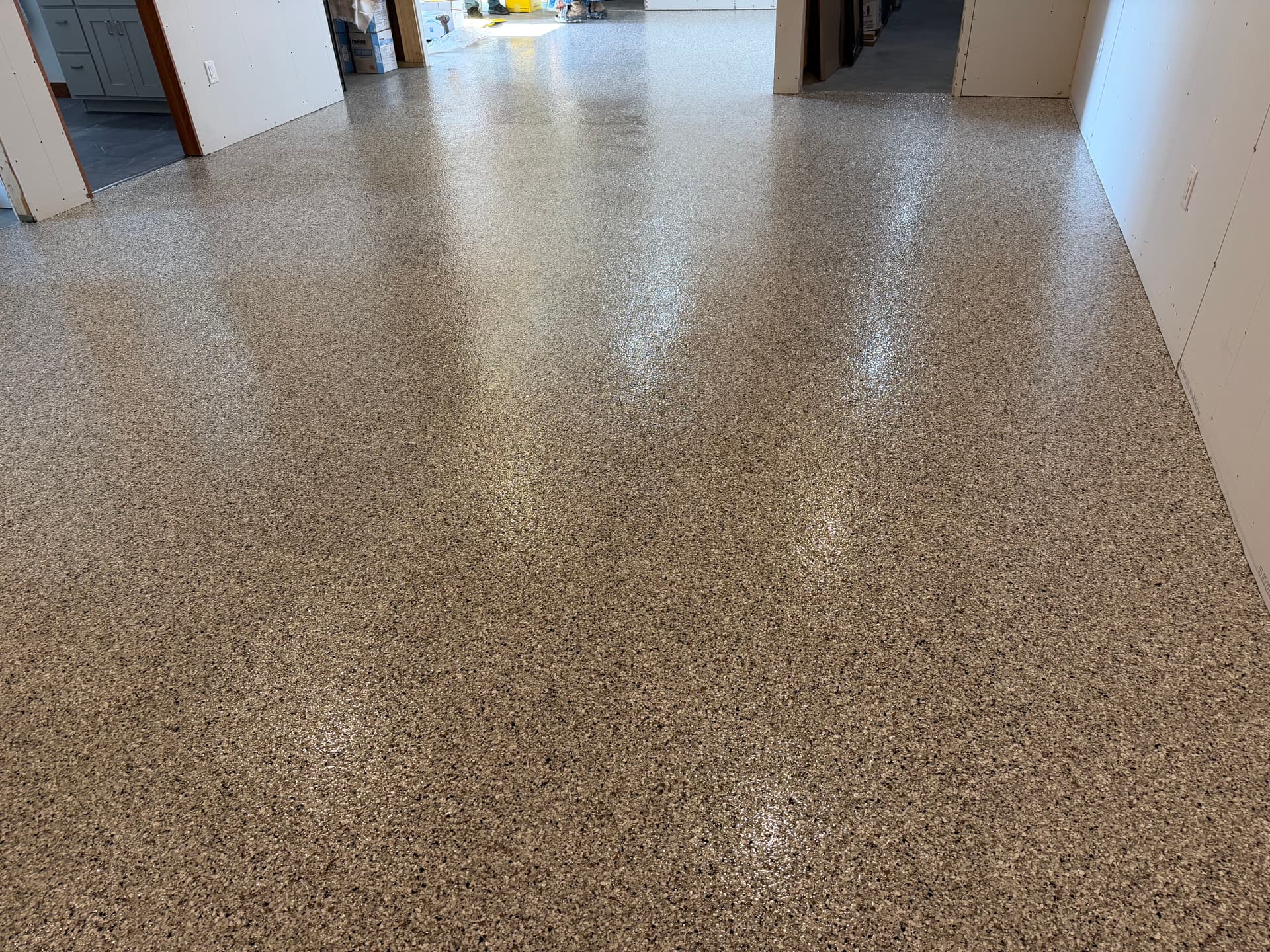
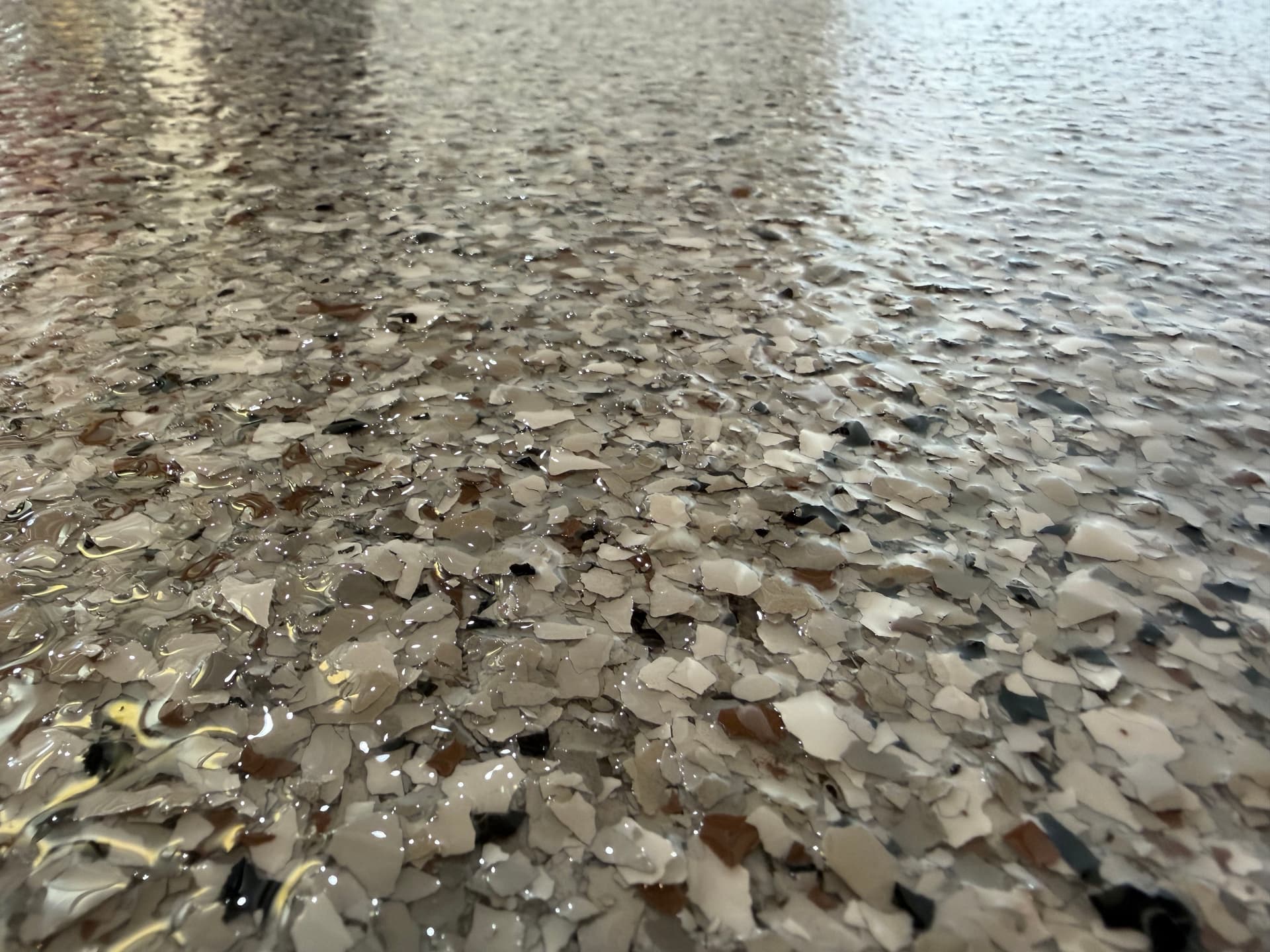
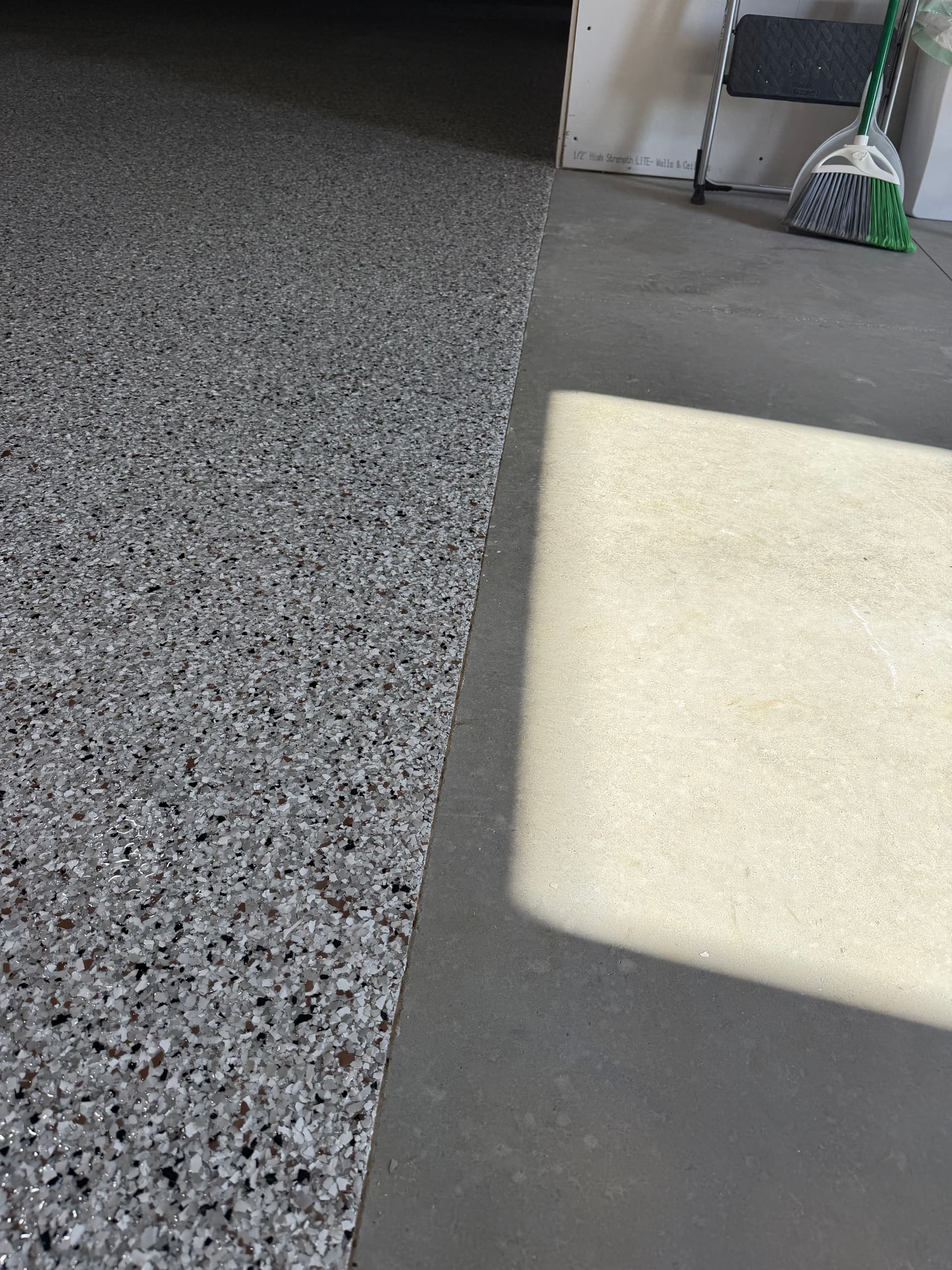
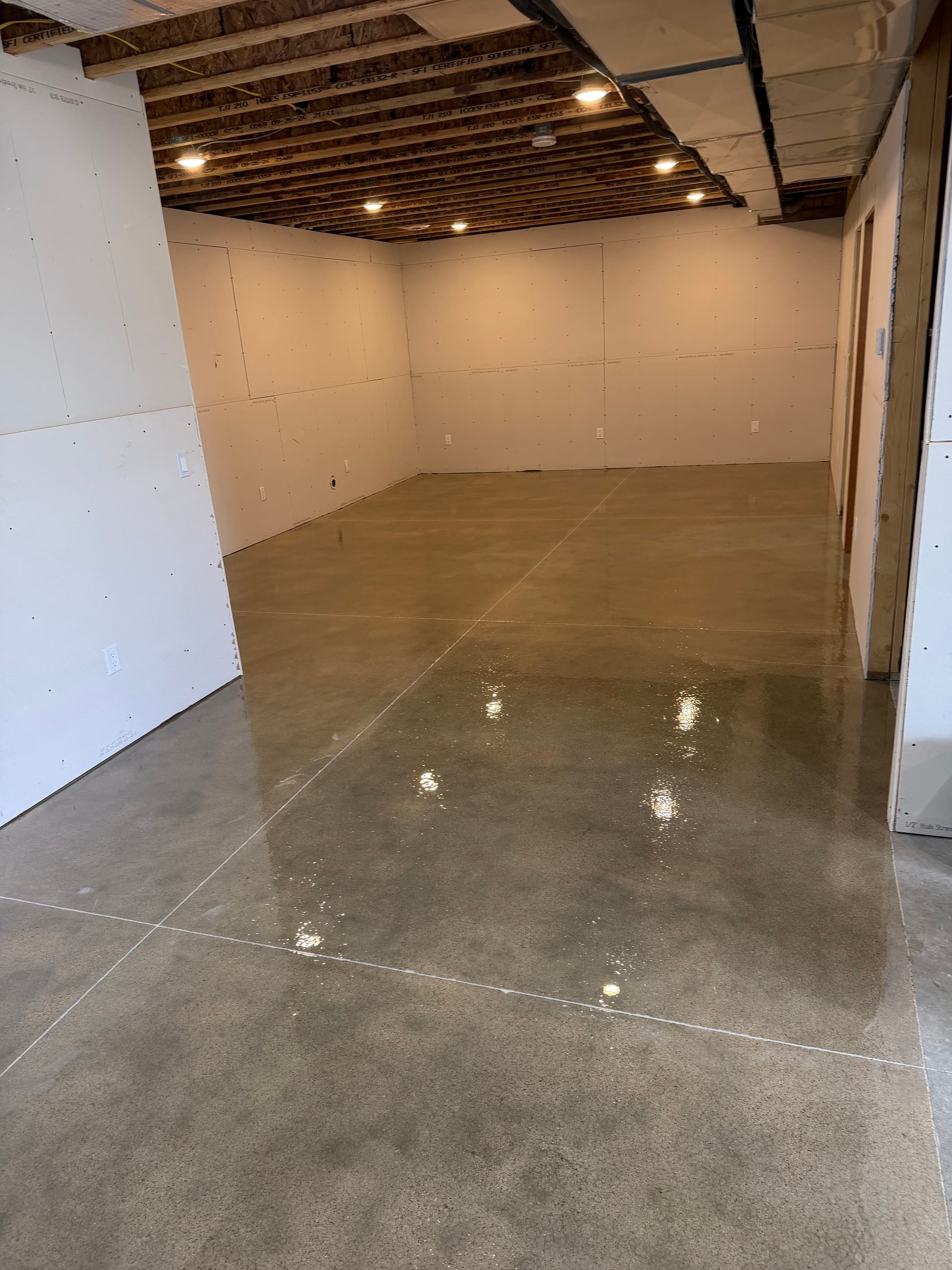
We installed a 1/4" coyote flake epoxy system on this basement floor. The coyote blend is a warm, neutral mix - tans, browns, grays, and blacks - that works well in a finished basement setting. It's not flashy, but it looks sharp and holds up hard. Before we ever touched the flake or the epoxy, we applied a moisture vapor barrier to the concrete. That part matters more than most people realize. Without it, moisture pushing up through the slab can cause adhesion failures down the road. We don't skip that step.
The prep and protection work that happens before the finish coat is honestly what separates a floor that lasts from one that doesn't. A moisture vapor barrier blocks that upward vapor transmission so the epoxy system bonds properly and stays bonded. It's not the most exciting thing to talk about, but it's the kind of detail that makes the difference between a 2-year floor and a 20-year floor.
Once the barrier was down and cured, we broadcast the coyote flakes into the epoxy base coat and finished it off with a clear topcoat. The result is a floor that's tough, easy to clean, and actually looks like it belongs in a finished space. No peeling, no dusting, no concrete showing through.
This is what we mean when we say done right from the ground up. A flake floor system is more than just a pretty finish. It's a layered build that starts with the right prep and ends with a surface that performs for the long haul.